
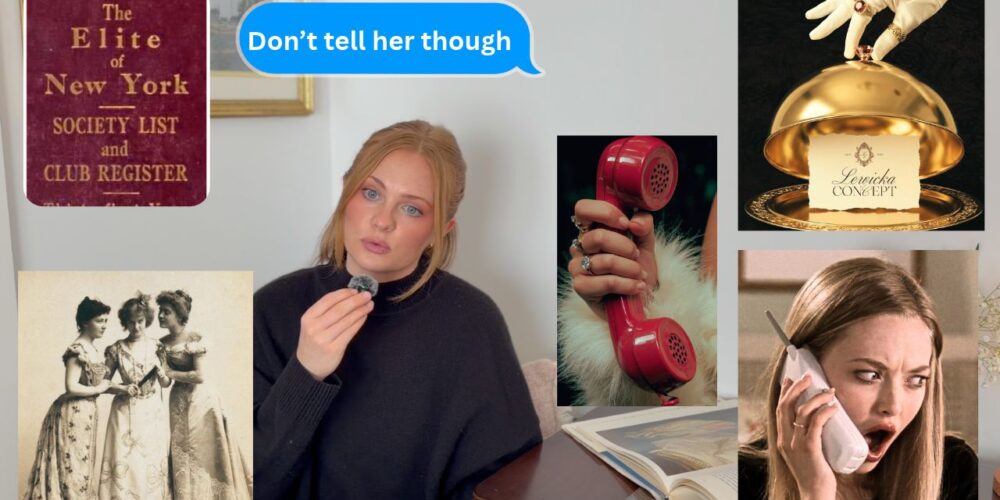
“The quest of the Inner Ring will break your hearts unless you break it.” – C.S. Lewis
Everyone can see official structures and their hierarchies- families have a mother and father. Schools have teachers and principals; workplaces have bosses and managers.
But another highly influential system is invisibly overshadowing even those. The system of the inner circle.
This is an invisible group of people who possess influence, access, intimacy, or status that isn’t written down anywhere. We not only crave being part of this inner circle, but we hurt ourselves and others in our quest to get inside it.
This inner group doesn’t post audition posters, so how does one actually get in? What are they made of, and what is their creed?
Do we operate within this secret society, and why do we want to?
In this article, we will answer all of those questions and finish by exposing the truth of acceptance. This will free us from any attachment we have to this crushing inner circle.
The Invisible Inner Circle
You are part of several groups. First, you belong to a family where your mother and father rule. Next, you belong to your bioregional community, where mayors and police govern. Some of you are part of a church, a sports club, and/or a workplace. All of which have technical leaders and subordinates. These are in place for common sense, order, and our ultimate good.
“A teacher is not greater than his master.” (Matthew 10:24)
“Let everyone be subject to the governing authorities, for there is no authority except that which God has established. The authorities that exist have been established by God. (Romans 13:1)
But underneath the surface of all of these groups lies an unspoken system of authority.
Who actually gets listened to?
Who knows the important people?
Who gets invited?
Who knows the private jokes?
Who has access?
Who decides what happens?
How They Operate
Not every close-knit group operates this way. Healthy friendships and communities naturally have intimacy, trust, and shared history. The dysfunction begins when access and acceptance become tools of social power.
You don’t necessarily know when you’ve entered. You gradually discover that you’re being included in certain conversations, that people share information with you, and that you have a kind of access which was previously unavailable.
To be part of the inner circle, you are required to agree with accepted opinions, learn who is ok to criticize and who to keep in good graces, avoid disagreeing with the influential members, and participate in conversations you might otherwise avoid. You must be careful with what you reveal and adopt the preferences and attitudes of the inner circle.
These groups operate on self-serving motivations. Everyone, even if appearances deceive, is ultimately in it for their own longevity within the accepted group. Sometimes the one who appears the most sympathetic is actually the most vicious. Using everyone else’s weaknesses to promote their own position, this person is often the unspoken leader.
Why you want in
We were created with a need to belong and a need for intimacy. God said that it is not good for a man to be alone. (Gen. 2:18)
We not only desire companionship, but we also want to be accepted, known, and to matter. These are God-given desires, but like most of those heavenly gems, they can become twisted.
The longing inside you, which cries, ” I want to belong,” finds a place within the inner group. The conditional acceptance, feelings of importance, and glass-house intimacy can feel like they are the real thing. But at the heart, something is fundamentally wrong…
You go from asking, “How can I best serve in the role I’ve been entrusted?”
to
“How does this world work, and how can I best position myself within it?”
In a dysfunctional inner circle, people begin cultivating relationships not simply because they value someone, but because that person provides access to something they want. Friendship becomes a self-serving investment. And influence becomes something to accumulate, not a natural byproduct of good character.
The entire thing is rotten to the core- a self-serving world where friendships aren’t real, good works are meant for display, and closeness is really just an “upper hand”.
The problem isn’t that we want to belong.
It’s that we start asking people to give us something only God can ultimately secure for us.
The problem isnt that we want to matter.
It’s that we desire to seem important rather than being convinced of it deep within.
Break the Circle
Jesus said, “The truth will set you free,” and I can’t think of a more desperate need for truth than when it comes to the deceptiveness of the “inner circle.”
Ephesians 1:4–5 says:
“In the Messiah, he chose us in love before the creation of the universe to be holy and without defect in his presence. He determined in advance that through Yeshua the Messiah we would be his sons…”
The truth is that you will still experience the sting of rejection—because you’re human. But rejection no longer has to answer the question, “Am I valuable?” If you matter to God, it can never be worth asking again whether you matter to anyone else.
Your need to belong is satisfied in the truth that God created you to be His. You belong to the One who made you, chose you, and adopted you. And once you become convinced of this—not merely in theory, but in the depths of your thinking—the power of the inner circle begins to break. You no longer have to perform to be accepted, compete to be chosen, or conform yourself to earn a place at someone else’s table.
But this does not mean becoming an isolated Christian who decides, “I don’t need anyone because I have Jesus.” Quite the opposite. When you no longer need people to prove your worth, you become free to actually love them. You can enter relationships without constantly measuring your place, wondering who likes you more, or trying to secure your position. You can enjoy people simply because you love who they are. You can celebrate someone else’s friendship without feeling threatened by it. You can be honest without being terrified that honesty will cost you your place.
And something else happens: you begin to see the inner circle differently. Instead of looking at its members with envy, you can begin to look at them with compassion. They are no longer the people who possess the belonging you desperately need from them. They are people who, like you, were made to belong—and who may be searching for it in places that can never truly satisfy. They become people to pray for, to have compassion on, and to love regardless of how they respond.
Freedom from the inner circle is not freedom from the need to belong. It is freedom to discover it in its proper place—and then to build relationships that are no longer based on status, access, or the fear of being left out, but on genuine love.
I hope you leave this article with a renewed sense of purpose. From this moment forward, live your life and steward every group you are part of with a Christlike heart and a bold inner declaration that you are loved, known, and fundamentally accepted.
Stay Happy <3



Leave a Reply